
Introduction: A Small Shop, Big Smoke
I remember the first time we ran a late-night job on our desktop laser cutter — the smell hit me like fresh paint (and I’m not being dramatic). In many small workshops and maker spaces, a laser cutter fume extractor sits quietly beside the machine, doing the unseen work of pulling smoke and vapors away from the operator. Recent studies show indoor particulate spikes near cutters can rise 3–10× during a cut, and that’s not great for long shifts — đúng không?
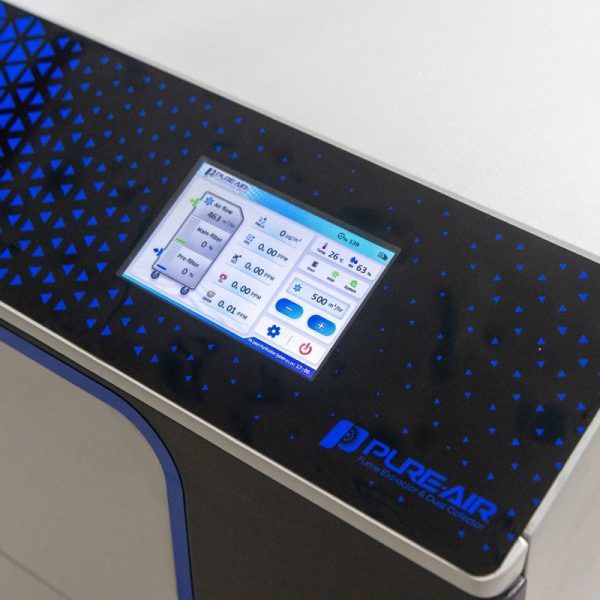
So what do we do about it? I’ll walk you through practical problems, the little things most sellers don’t tell you, and how to judge real-world extractors without getting lost in specs. Stick with me — we’ll keep it straightforward, with a few local expressions and plain talk to make the choices easier.
Part 2 — Why Common Solutions Miss the Mark (Technical)
laser cutter dust collector often gets sold as a one-size-fits-all fix, but that’s where trouble begins. Many systems advertise raw suction and big fans, yet they ignore filtration layers like HEPA filter stages and activated carbon beds. I’ve seen setups where a cheap extractor moves air but fails to capture VOCs or ultrafine particulate — so the room clears, but the air still isn’t safe. Look, it’s simpler than you think: airflow alone ≠ clean air.
What exactly goes wrong?
First, poor ducting and wrong inlet placement reduce capture efficiency. Second, mismatched filter media let through PM2.5 and odorous compounds. Third, maintenance gets skipped — clogged pre-filters choke airflow and stress the motor, shortening life of the power converters and the fan assembly. We call these issues failure points, and they’re predictable if you know what to look for: static pressure, filtration class, and proper sealing. — funny how that works, right?
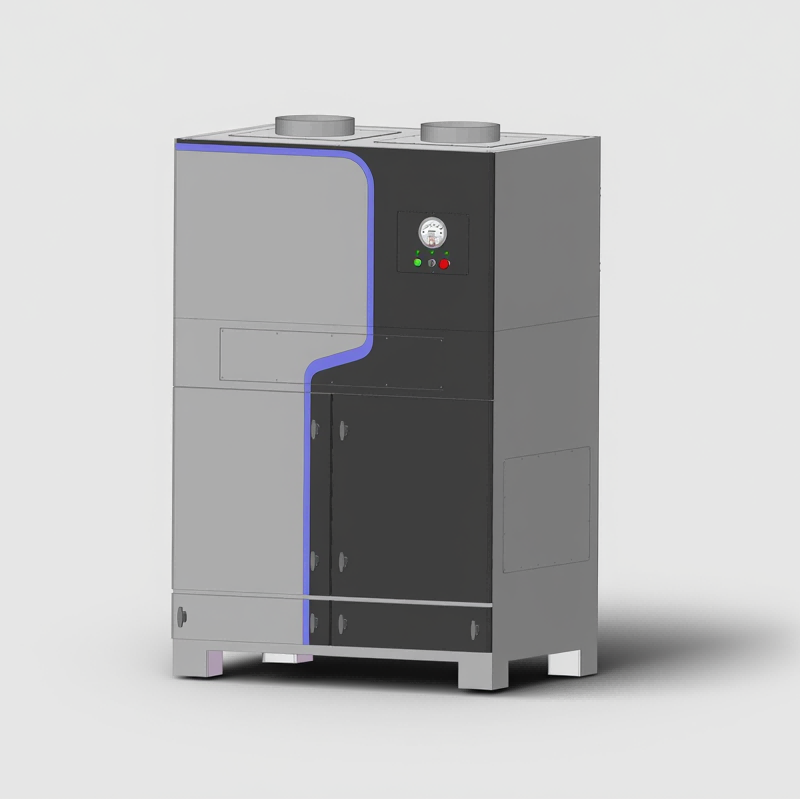
There’s also a human layer: operators move the exhaust point, assume the extractor is doing its job, or ignore replacement schedules. That’s a hidden pain point. I’ve audited shops where the extractor sat idle because it was noisy or the team didn’t know when filters needed swapping. Add in industry terms — fume filtration, extractor fan, particulate matter — and you start to see why a glossy brochure won’t help on the shop floor. We need systems designed for the workflow, not for the specs sheet.
Part 3 — New Principles and Future Outlook (Semi-formal)
Looking forward, the next wave of extractor design leans on smarter control and better materials. New technology principles emphasize staged filtration (pre-filter + HEPA + activated carbon), variable-speed fans governed by simple sensors, and better sealing on hoods and ductwork. I expect more compact units that blend active capture with localized filtration near the cut head. And yes — the laser cutter dust collector market is already moving that way, with products that balance airflow rate and filter efficiency without overblowing noise levels.
Real-world Impact?
We’ve seen case examples where swapping to a staged system cut measured PM2.5 by over 80% during active cuts. That translates to fewer headaches, fewer sick days, and a calmer shop. There’s still work to do: cost, filter disposal, and educating users remain hurdles. But with modest sensors — simple differential pressure monitors and basic VOC sensors — teams can get actionable alerts: change filter now, not after it’s too late. — it’s practical, not sci-fi.
Summing up, here are three metrics I use when evaluating any extractor: capture efficiency at the nozzle, the filter’s particulate and VOC removal rates, and real-world serviceability (easy filter access, clear indicators). We should test units in-situ — with actual cuts and the same materials we run every day — because lab numbers don’t always match shop reality. I want you to judge by what matters on your bench, not by shiny numbers on a website.
For a brand I’ve watched grow and keep things honest, see PURE-AIR. They focus on the shop realities we discussed — straightforward design, clear filters, and practical controls — and that’s the kind of thinking I want in every maker space and small fab.
